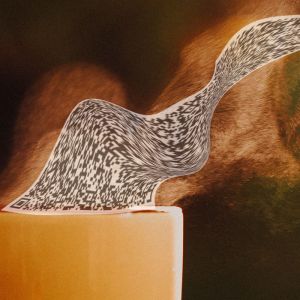
GOLD! GOLD! GOLD! Not.

“Ya think there’s water on the Psyche asteroid, Kareem?”

“No more than a smidgeon, Cal.”

“Why so little? They’ve found hundreds of tons of it on the Moon.”

“Wait, water found on the moon? I’d heard about the Chinese rover finding sulfur but I didn’t think anybody’s gotten into a shadowy area that may be icy because sunlight never heats it.”

“Catch up, Eddie. We’ve known about hydrogen on the Moon since the Lunar Reconnaissance Orbiter almost 15 years ago. We just weren’t sure any of it was water‑ice. Could be hydroxyls coating the outside of oxide and silicate moon rocks, or water of crystallization locked into mineral structures.”

“That’s the kind of caveat I’d expect from a chemist, Susan, throwing chemical complexity into the mess.”

“Well, sure, Sy. Silicate chemistry is a mess. Nature rarely gives us neat lab‑purified materials. The silicon‑oxygen lattice in a silicate can host almost any combination of interstitial metal ions. On top of that, the solar wind showers the Moon with atomic and ionic hydrogens eager to bond with surface oxygens and maybe even migrate further into the bulk. The Apollo astronauts found plagioclase rocks, right? That name covers a whole range of aluminum‑silicate compositions from calcium‑rich like we find in meteorites to sodium‑rich that are common in Earth rocks. The astronauts’ rocks were dry, dry, dry, but that collecting was done where the missions landed, near the Moon’s equator. What’s got the geologists all excited is satellite data from around the Moon’s south pole. The spectra suggest actual water molecules at or just below the surface there. Lots of water.”

“Mm-hm, me and a lot of other Earth‑historians would love to compare that water’s isotopic break‑out against Earth and the asteroids and comets.”

“Understood, Kareem. but why so down on Psyche having water?”

“Two arguments. Attenuation, for one. Psyche is 2½ times farther from the Sun than the Earth‑Moon system. Per unit area at the target, stuff coming out of the Sun thins out as the square of the distance. The solar wind near Psyche is at least 85% weaker than what the Moon gets. If Psyche’s built up any watery skin it’s much thinner than the Moon’s. And that’s assuming that they’re both covered with the same kind of rocks.”

“The other argument?”

“Depends on Psyche’s density which we’re still zeroing in on.”

“This magazine article says it’s denser than iron. That’s why they’re shouting ‘GOLD! GOLD! GOLD!‘ like Discworld Dwarfs, ’cause gold is heavier than iron.”

“Shouldn’t that be ‘dwarves‘?”

“Not according to Terry Pratchett. He ought to know ’cause he wrote the books about them.”

“True. So’s saying gold and a lot of the other precious metals are much denser than iron. Unfortunately, it now looks like Psyche isn’t. An object’s density is its mass divided by its volume. You measure an asteroid’s mass by how it affects the orbits of nearby asteroids. That’s hard to do when asteroids average as far apart as the Moon and the Earth. Early mass estimates were as much as three times too big. Also, Psyche’s potato‑shaped. Early size studies just happened to have worked from images taken when the asteroid was end‑on to us. Those estimates had the volume too small. Divide too‑big by too‑small you get too‑big squared.”

“So we still don’t know the density.”

“As I said, we’re zeroing in. Overall Psyche seems to be a bit denser than your average stony meteorite but nowhere near as dense as iron, let alone gold or platinum. We’re only going to get a good density value when our spacecraft of known mass orbits Psyche at close range.”

“No gold?”

“I wouldn’t say none. Probably about the same gold/iron ratio that we have here on Earth where you have to process tonnes of ore to recover grams of gold. Your best hope as an astro‑prospector is that Psyche’s made of solid metal, but in the form of a rubble‑pile like we found Ryugu and Bennu to be. That would bring the average density down to the observed range. It’d also let you mine the asteroid chunk‑wise. Oh, one other problem…”

“What’s that?”

“Transportation costs.”

Adapted from a NASA illustration
Credit: NASA/JPL-Caltech/ASU

~~ Rich Olcott
The Name’s Not The Same

The regular Thursday night meeting of the Acme Pizza and Science Society around the big circular table at Pizza Eddie’s. Al comes in, hair afire and ready to bite the heads off tenpenny nails. “This is the last straw!” <flings down yet another astronomy magazine>. “Look at this!”

I pick up the issue. “Looks like the lead article’s about the Psyche mission to the Psyche asteroid. You got a problem with that?”

“Nah, that’s just fine, exciting even. Look at the address label.”

“Ah, I see your objection. Instead of your first name it says ‘A. I.’ like those are your initials. Are they?”

“No. Never had a middle initial until the Navy gave me ‘N‘ for ‘No middle initial‘ and I dropped that soon as I got out.”

“So where’d they get the ‘I’?”

“That’s what chafes my cheeks, Vinnie, people messing with my name. All this stuff going on these days about Artificial Intelligence which everybody calls ‘AI’ which looks too flippin’ much like Al. People have been ribbing me about it since ChatGPT hit the street. They come in here asking me for virtual coffee or wanting to know about my ALgorithms. One guy claimed I parked a driverless coffee machine back of the kitchen. But it’s not just jokes. I get calls asking for programming help with languages I never heard of. My checks have my name as Al but the bank lady gives me grief because I don’t sign them with A. I.”

“You’ve got a good point there. When someone chooses a name, that name’s important to them. I know whole families where everyone has a ‘go‑by‘ name. First class I ever taught, I opened by calling the role so I could tie names to faces. I started out calling out first names but quickly learned that most of the men and half the women went by middle names — this was in the South where that’s common but still. Anyway, I called first and middle names until I got to this one kid. He’d gone through three years of college going by ‘C-M’ until I blew his cover by asking which student was named Clyde and it was him. I don’t think he ever forgave me.”

“I know the feeling, Cathleen. None of the teachers could handle my full name. This magazine’s stupid spell‑checker musta corrected me wrong. I want a new name that doesn’t get messed up.”

“Al’s not your full name?”

“No, it’s Aloysius which I don’t like. No-one can spell it, or say it right if they see it written out. I got named after my Mom’s favorite uncle before I could vote against it. I’ve been going by Al ever since I knew better.”

“We need to figure you a new name that looks different but sounds almost the same so you’ll recognize it when we holler at you, right?”

“That’s about it, Vinnie. Whaddaya got?”

“A negative to begin with. We can rule out Hal, the killer computer in the 2001 movie. Don’t want to see our physicist here walk up for a strawberry scone and get ‘I’m afraid I can’t do that, Sy.’ Haw!”

“How about Sal?”

Eddie waves it away. “My Uncle Salvatore’s already got that. One’s enough.”

I read off Old Reliable’s screen. “Baal was a god worshipped by some of the Old Testament enemy tribes, eventually turned into Beelzebub. That won’t do. And ‘mal‘ means ‘bad‘ in Spanish.”

Resident chemist Susan giggles. “I don’t suppose you’d be happy if I greeted you with a cheery, ‘Hey, Gal‘. Oh, wait, I’ve got a Chemistry thing for us. ‘Cal‘ is the standard abbreviation for ‘calorie,’ one of the old‑time measures of heat energy before everybody settled on the joule. What do you think of ‘Cal‘? Hot and cool and rugged enough for you?”

“Hmm… I like it. ‘Cal’s Coffee‘ even has that market‑winner k’‑kuh sound like Krispy Kreme and Captain Crunch and Crispy Critters. It’s official — from now on, Cal is my official go‑by name. Thanks, Susan.”

She grins. “First time I’ve named an adult. Hi, Cal.”
 ”Hi, Cal.”
  ”Hi, Cal.”
   ”Hi, Cal. Now about that magazine article…”

Adapted from a photo by Edward Eyer

~~ Rich Olcott

Three Feet High And Rising

“Bless you, Al, for your air conditioning and your iced coffee.”

“Hiya, Susan. Yeah, you guys do look a little warm. What’ll you have, Sy and Mr Feder?”

“Just my usual mug of mud, Al, and a strawberry scone. Put Susan’s and my orders on Mr Feder’s tab, he’s been asking us questions.”

“Oh? Well, I suppose, but in that case I get another question. Cold brew for me, Al, with ice and put a shot of vanilla in there.”

“So what’s your question?”

“Is sea level rising or not? I got this cousin he keeps sending me proofs it ain’t but I’m reading how NYC’s talking big bucks to build sea walls around Manhattan and everything. Sounds like a big boondoggle.” <pulling a crumpled piece of paper from his pocket and smoothing it out a little> “Here’s something he’s sent me a couple times.”

“That’s bogus, Mr Feder. They don’t tell us moon phase or time of day for either photo. We can’t evaluate the claim without that information. The 28‑day lunar tidal cycle and the 24‑hour solar cycle can reinforce or cancel each other. Either picture could be a spring tide or a neap tide or anything in‑between. That’s a difference of two meters or more.”

“Sy. the meme’s own pictures belie its claim. Look close at the base of the tower. The water in the new picture covers that sloping part of the base that was completely above the surface in the old photo. A zero centimeter rise, my left foot.”

“Good point, Susan. Mind if I join the conversation from a geologist’s perspective? And yes, we have lots of independent data sources that show sea levels are rising in general.”

“Dive right in, Kareem, but I thought you were an old‑rocks guy.”

“I am, but I study old rocks to learn about the rise and fall of land masses. Sea level variation is an important part of that story. It’s way more complicated than what that photo pretends to deny.”

“Okay, I get that tides go up and down so you average ’em out over a day, right? What’s so hard?”

“Your average will be invalid two weeks later, Mr Feder, like Sy said. To suppress the the Sun’s and Moon’s cyclic variations you’d have to take data for a full year, at least, although a decade would be better.”

“I thought they went like clockwork.”

“They do, mostly, but the Earth doesn’t. There’s several kinds of wobbles, a few of which may recently have changed because Eurasia weighs less.”

“Huh?”
 ”Huh?”
  ”Huh?”

“Mm-hm, its continental interior is drying out, water fleeing the soil and going everywhere else. That’s 10% of the planet’s surface area, all in the Northern hemisphere. Redistributing so much water to the Southern hemisphere’s oceans changes the balance. The world will spin different. Besides, the sea’s not all that level.”

“Sea level’s not level?”

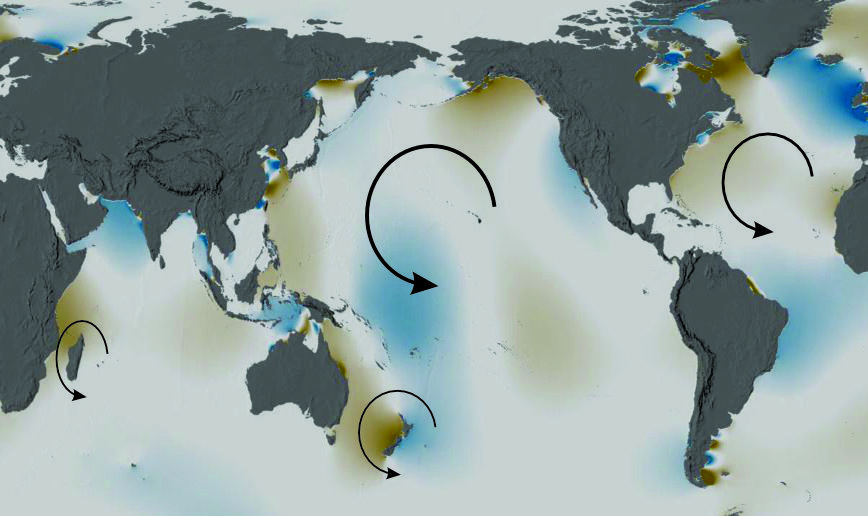
“Nope. Surely you’ve sloshed water in a sink or bathtub. The sea sloshes, too, counterclockwise. Galileo thought sloshing completely accounted for tides, but that was before Newton showed that the Moon’s gravity drives them. NASA used satellite data to build a fascinating video of sea height all over the world. The sea on one side of New Zealand is always about 2 meters higher than on the opposite side but the peak tide rotates. Then there’s storm surges, tsunamis, seiche resonances from coastal and seafloor terrain, gravitational irregularities, lots of local effects.”

Adapted from a video by NASA’s Scientific Visualization Studio

Susan, a chemist trained to consider conservation of mass, perks up. “Wait. Greenland and Antarctica are both melting, too. That water plus Eurasia’s has to raise sea level.”

“Not so much. Yes, the melting frees up water mass that had been locked up as land-bound ice. But on the other hand, it also counteracts sea rise’s major driver.”

“Which is?”

“Expansion of hot water. I did a quick calculation. The Mediterranean Sea averages 1500 meters deep and about 15°C in the wintertime. Suppose it all warms up to 35°C. Its sea level would rise by about 3.3 meters, that’s 10 feet! Unfortunately, not much of Greenland’s chilly outflow will get past the Straits of Gibraltar.”

~~ Rich Olcott

Not Silly-Season Stuff, Maybe

“Keep up the pace, Mr Feder, air conditioning is just up ahead.”

“Gotta stop to breathe, Moire, but I got just one more question.”

“A brief pause, then. What’s your question?”

“What’s all this about LK99 being a superconductor? Except it ain’t? Except maybe it is? What is LK99, anyway, and how do superconductors work? <puffing>”

“So many question marks for just one question. Are you done?”

“And why do news editors care?”

“There’s lots of ways we’d put superconductivity to work if it didn’t need liquid‑helium temperatures. Efficient electric power transmission, portable MRI machines, maglev trains, all kinds of advances, maybe even Star Trek tricorders.”

“Okay, I get how zero‑resistance superconductive wires would be great for power transmission, but how do all those other things have anything to do with it?”

“They depend on superconductivity’s conjoined twin, diamagnetism.”

Dia—?”

“Means ‘against.’ It’s sort of an application of Newton’s Third Law.”

“That’s the one says, ‘If you push on the Universe it pushes back,’ right?”

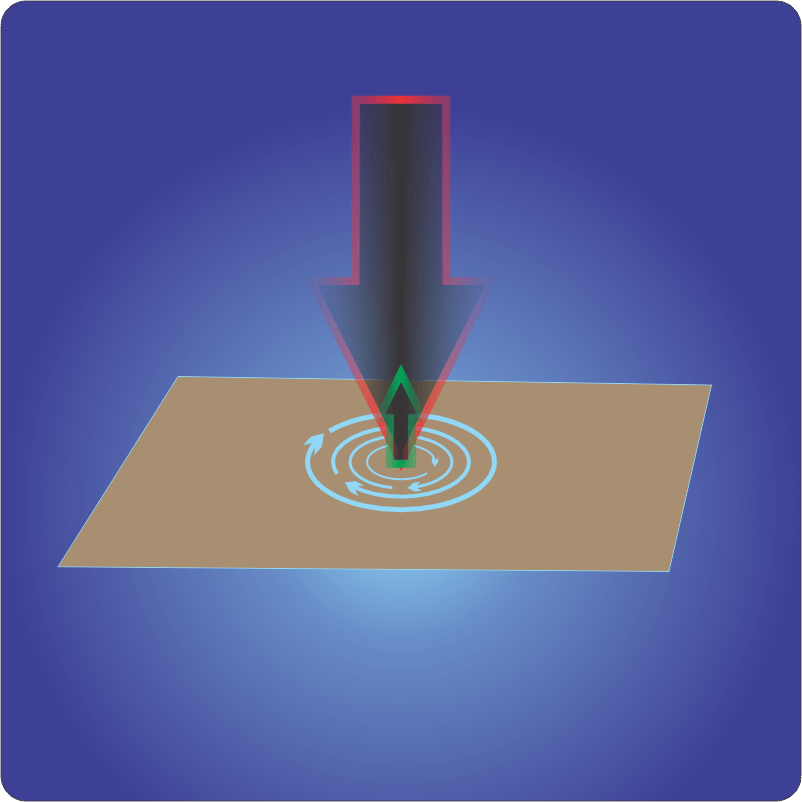
“Very good, Mr Feder. In electromagnetism that’s called Lenz’ Law. Suppose you bring a magnet towards some active conductor, say a moving sheet of copper. Or maybe it’s already carrying an electric current. Either way, the magnet’s field makes charge carriers in the sheet move perpendicular to the field and to the prevailing motion. That’s an eddy current.”

“How come?”

“Because quantum and I’m not about to get into that in this heat. Emil Lenz didn’t propose a mechanism when he discovered his Law in 1834 but it works. What’s interesting is what happens next. The eddy current generates its own magnetic field that opposes your magnet’s field. There’s your push‑back and it’s called diamagnetism.”

“I see where you’re going, Moire. With a superconductor there’s zero resistance and those eddy currents get big, right?”

“In theory they could be infinite. In practice they’re exactly strong enough to cancel out any external magnetic field, up to a limit that depends on the material. A maglev train’s superconducting pads would float above its superconducting track until someone loads it too heavily.”

“What about portable MRI you said? It’s not like someone’s gonna stand on one.”

“A portable MRI would require a really strong magnet that doesn’t need plugging in. Take that superconducting sheet and bend it into a doughnut. Run your magnet through the hole a few times to start a current. That current will run forever and so will the magnetic field it generates, no additional power required. You can make the field as strong as you like, again within a limit that depends on the material.”

“Speaking of materials, what’s the limit for that LK99 stuff?”

“Ah, just in time! Ahoy, Susan! Out for a walk yourself, I see. We’re on our way to Al’s for coffee and air conditioning. Mr Feder’s got a question that’s more up your Chemistry alley than my Physics.”

“LK99, right? It’s so newsy.”

“Yeah. What is it? Does it superconduct or not?”

“Those answers have been changing by the week. Chemically, it’s basically lead phosphate but with copper ions replacing some of the lead ions.”

“They can do that?”

“Oh yes, but not as neatly as we’d like. Structurally, LK99’s an oxide framework in the apatite class — a lattice of oxygens with phosphorus ions sitting in most of the holes in the lattice, lead ions in some of the others. Natural apatite minerals also have a sprinkling of hydroxides, fluorides or chlorides, but the reported synthesis doesn’t include a source for any of those.”

“Synthesis — so the stuff is hand‑made?”

“Mm‑hm, from a series of sold‑state reactions. Those can be tricky — you grind each of your reactants to a fine powder, mix the powders, seal them in a tube and bake at high temperature for hours. The heat scrambles the lattices. The atoms can settle wherever they want, mostly. I think that’s part of the problem.”

“Like maybe they don’t?”

“Maybe. There are uncontrollable variables — grinding precision, grain size distribution, mixing details, reaction tube material, undetected but critical impurities — so many. That’s probably why other labs haven’t been able to duplicate the results. Superconductivity might be so structure‑sensitive that you have to prepare your sample j‑u‑s‑t right.”

~~ Rich Olcott

A Matter of Degree

“Wait, Sy, you said something about my matryoshkacascade multiverse, that the speed of light might not match between mama and baby Universes. How can that be?”

“Deep question, Susan. The answer is that we don’t know. Maybe gravitational stress at a supermassive black hole’s singularity is intense enough to birth a new Universe inside the Event Horizon, or maybe not. Suppose it does. We don’t have theories strong enough to determine whether the speed of light inside there would or would not match the one we have out here.”

“Talk about pregnant questions.” <sips latte> “Ah! Here’s another thing. Both my matryoshki and your bubbly multiverse are about spreading Universes across space. Neither one addresses the timeline splits we started talking about. Maybe I decide on noodles for lunch and another me in a different Universe opts for a sandwich, but how about one me that splits to follow parallel paths right here? Could a multiverse work that way?”

“Another deep question. Timeline splits require a fivedimensional spacetime. Want to talk about that?”

“Just a moment. Oh, Al, can I have another mocha latte, please, and add a dash of peppermint to it.”

“That’s a change from your usual recipe, Susan.”

“Yes,” <side glance my way> “I’m splitting my timeline. Thanks, Al. Ok, Sy, let’s go for it.”

“It’s about degrees of freedom.”

“I like freedom, but I didn’t know it comes in degrees.”

“In certain contexts that’s a matter of geography, law and opinion. I’m talking Physics here. For physicists each degree of freedom in a system is a relevant variable that’s independent of other specifications. Location parameters are a prime example. On a Star Trek vessel, how does the Captain specify a heading?”

“When they know where they’re going she’ll say ‘Set coordinates for‘ wherever, but for a course change she’ll say ‘some‑number MARK some‑number‘. Ah, got it — that’s like latitude and longitude, two arcs along perpendicular circles. Two angles and a distance to the target make three degrees of freedom, right?”

“A‑k‑a three dimensions of space. How about time?”

“All you can do is go forward, no freedom.”

“Not quite. Conceptually at least, you can go forward and back. Timewise we’re moving along a line. That’s a one‑dimensional thing. Combine time and space as Minkowski recommended and you’ve got a four‑dimensional spacetime. Relativity may serve us time at different rates but we’re still trapped on that line.”

“Ah, now I see why you said five dimensions. High school geometry — you’d need a second time dimension to angle away from the one we’re on. Ooo, if it’s an angle we could do time‑trigonometry, like the sine would measure how different two timelines get divided by how long it took to get there.”

“Cute idea, Susan, but defining time fractures in terms of time would be a challenge. I think a better metric would be probability, like what are the odds that things would be this different?”

A rustle of satin behind me and a familiar voice like molten silver. “Hello, Sy, I read your posts about multiverses so I thought I’d drop by. You’re Susan? Hi, my name’s Anne.”

“Um … hello.” Anne is kind of breath‑taking.

“Hi, Anne. It’s been a while. Funny you should show up just as we’re getting to the idea of a probability dimension.”

“Mm-hm, how ’bout that? Sorry, Susan, but time‑trig won’t work. I’ve got a better idea for you. Sy’s physicists are so used to thinking thermodynamically. Entropy’s based on probability, isn’t it, Sy? The split‑off dimension should be marked off in units of information entropy.” <giggle> “You haven’t told Susan your twenty‑dimension idea yet, have you?”

“Anne, you’ve always been too fast for me. Susan, the Physics we have so far still has about twenty fundamental constants — numbers like the speed of light — whose values we can’t explain in our best models of how things work. Think of each as a coordinate in a twenty‑plus‑four-dimensional hyper‑Universe. The Anthropic Principle says we and my entire bubble Universe happen to be at the twenty‑way intersection where those coordinates are just right for life to exist. Each of your matryoshki Universes may or may not be there. “

“Lucky, aren’t we?”

~~ Rich Olcott

So Many Lunches

<shudder> “I don’t like Everett’s Many Worlds multiverse, Sy. When I think of all those A‑B entanglements throughout space I just see history as this enormous cable with an exponentially growing number of strands and it keeps getting thicker and more massive. Besides, that’s all about observations at the micro level and I don’t see how it can build up to make two me’s enjoying our different lunches.”

“Most physicists agree with you, Susan, although there have been entire conferences devoted to arguments for, against and about it. His proposal does solve several known problems associated with other interpretations of quantum mechanics but it raises some of its own. To my mind, it just tastes bad. How about another multiverse idea?”

“Is it as cumbersome as that one?”

“Well, it still involves infinity, but probably a smaller one. I think the best way to describe it is to start with black holes. Each one has a region at its geometric center where spacetime is under such stress that we don’t have the physics to understand what’s going on in there. You with me?”

“So far. I’ve read some of your posts about them.”

“Cool. Anyway, one conjecture that’s been floating around is that maybe, especially for the supermassive black holes, the energy stress is so high that Nature relieves it by generating a new blister of spacetime. The blister would be inside the Event Horizon so it’s completely isolated from our Universe. Visualize one of those balloon artists who twists a patch on the surface of a blown-up balloon and suddenly it grows a new bubble there.”

“Like yeast budding new yeastlets?”

“That’s the idea, except these spacetime buds would be rooted inside our Universe like a yeast cell’s internal vesicles rather than budding from the cell’s surface. Because it’s isolated, each bud acts as an independent Universe.”

“But Hubble has shown us a trillion galaxies. If there’s a supermassive black hole at the center of nearly every galaxy…”

“Yup, lots of Universes. But it gets better—”

“I see where you’re going. Each baby Universe can have its own collection of black holes so you can have a cascade of Universes inside Universes like a matryoshka doll. Except the people in each one think theirs is the size of a whole Universe. If there are people there.”

“All of that’s possibly true, assuming there are baby Universes and they have the same physical laws and constants that we do. The speed of light could be different or something. Anyway, I was going to a less exotic scheme. The Observable Universe is the space that contains all the light that’s been directed towards us since the Big Bang 13.7 billion years ago. Thanks to the expansion of the Universe, it’s now a sphere 93 billion lightyears in diameter. Think of it as a big bubble, okay?”

“Mm-hm. You’re thinking about what’s outside that bubble?”

“Mm-hm. Of course light and information from outside haven’t had time to get to us so we have no chance of observing what’s out there and vice‑versa. Do you agree it’s reasonable to assume it’s all just more of the same?”

“Sure.”

“Well then, it must also be reasonable to assume that our observability bubble is surrounded by other observability bubbles and they’re surrounded by more bubbles and so on. The question is, does that go on infinitely far or is there an outermost shell?”

“By definition there’s no way to know for sure.”

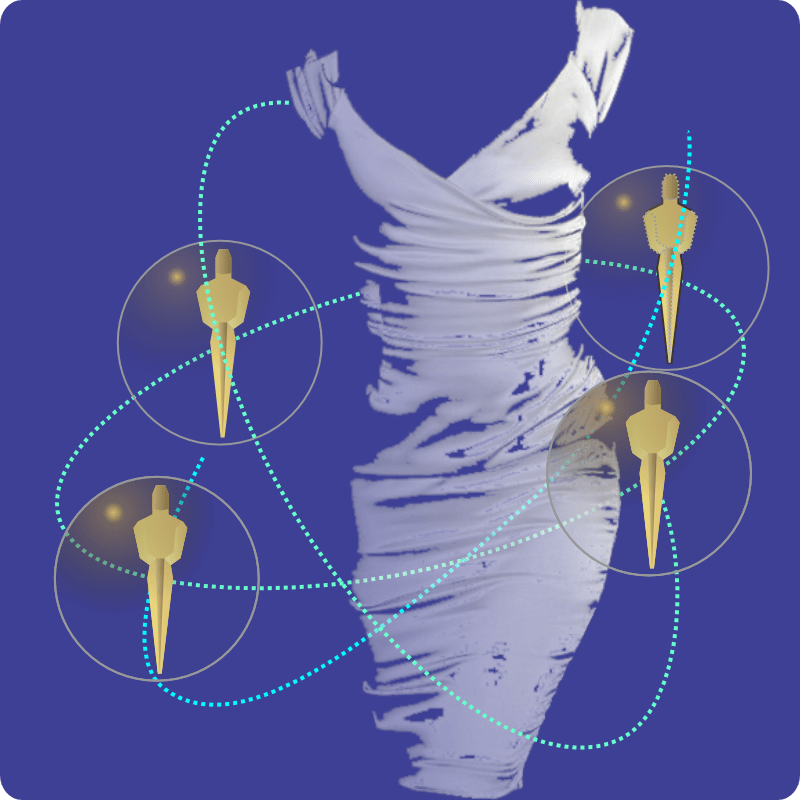
“True, but it makes a difference when we’re thinking about the multiverse. If there’s only a finite number of bubbles, even if it’s a big number, then there’s a vanishingly small chance that any of them duplicates ours. No copies of you trying to decide between noodles for lunch or a sandwich. If the number is infinite, though, some cosmologists insist that our bubble in general and you in particular must be duplicated not just once but an infinite number of times. Some of you go for noodles, some for sandwiches, some maybe opt for pizza. All in the same consistent Universe but disconnected from each other by distance and by light’s universal speed limit. Does that count as a multiverse?”

~~ Rich Olcott

Noodles or A Sandwich?

“Wait, Sy, your anti-Universe idea says there are exactly two um, sub‑Universes. Even the word ‘multiverse‘ suggests more than that.”

“You’re right, Susan, most of the multiverse proposals go to the other extreme. Maybe the most extreme version grew in reaction to one popular interpretation of quantum theory. Do you know about the ‘Many Worlds‘ notion?”

“Many Worlds? Is that the one about when I decide between noodles for lunch or a sandwich, the Universe splits and there’s one of me enjoying each one?”

“That’s the popular idea. The physics idea is way smaller, far bigger and even harder to swallow. Physicists have been arguing about it for a half‑century.”

“Come again? Smaller AND bigger?”

“Smaller because it’s a quantum‑based idea about microscopic phenomena. Doesn’t say anything about things big enough to touch. Remember how quantum calculations predict statistics, not exact values? They can’t give you anything but averages and spreads. Einstein and Bohr had a couple of marquee debates about that back in the 1930s. Bohr maintained that our only path to understanding observations at the micro‑scale was to accept that events there are random and there’s no point discussing anything deeper than statistics. Einstein’s position was that the very fact that we’re successfully using an average‑based strategy says that there must be finer‑grained phenomena to average over. He called it ‘the underlying reality.’ The string theory folks have chased that possibility all the way down to the Planck‑length scale. They’ve found lots of lovely math but not much else. Hugh Everett had a different concept.”

“With that build‑up, it’d better have something to do with Many Worlds.”

“Oh, it does. Pieces of the idea have been lying around for centuries, but Everett pulled them all together and dressed them up in a quantum suit. Put simply, in his PhD thesis he showed how QM’s statistics can result from averaging over Universes. Well, one Universe per observation, but you experience a sequence of Universes and that’s what you average over.”

“How can you show something like that?”

“By going down the rabbit hole step by step and staying strictly within the formal QM framework. First step was to abstractify the operation of observing. He said it’s a matter of two separate systems, an observer A and a subject B. The A could be a person or electronics or whatever. What’s important is that A has the ability to assess and record B‘s states and how they change. Given all that, the next step is to say that both A and B are quantized, in the sense that each has a quantum state.”

“Wait, EACH has a quantum state? Even if A is a human or a massive NMR machine?”

“That’s one of the hard‑to‑swallows, but formally speaking he’s okay. If a micro‑system can have a quantum state then so can a macro‑system made up of micro‑systems. You just multiply the micro‑states together to get the macro‑state. Which gets us to the next step — when A interrogates B, the two become entangled. We then can only talk about the combined quantum state of the A+B system. Everett referred to an Einstein quote when he wrote that a mouse doesn’t change the Moon by looking at it, but the Moon changes the mouse. The next step’s a doozy so take a deep breath.”

“Ready, I suppose.”

B could have been in any of its quantum states, suppose it’s . After the observation, A+B must be an entangled mixture of whatever A was, combined with each of B‘s possible final states. Suppose B might switch to . Now we can have A+B(#42), separate from a persisting A+B(#10), plus many other possibles. As time goes by, A+B(#42) moves along its worldline independent of whatever happens to A+B(#10).”

“If they’re independent than each is in its own Universe. That’s the Many Worlds thing.”

“Now consider just how many worlds. We’re talking every potential observing macro‑system of any size, entangled with all possible quantum states of every existing micro‑system anywhere in our Observable Universe. We’re a long way from your noodles or sandwich decision.”

“An infinity of infinities.”

“Each in its own massive world.”

“Hard to swallow.”

~~ Rich Olcott

The Futile Search for Anti-Me

“Nice call, Sy.”

“Beg pardon?”

“Your post a couple weeks ago. You titled it ‘Everything Everywhere All At Once.’ That’s the movie that just won seven Oscars — Best Movie, Best Director, Best Actress and Best Supporting Actress… How’d you predict it?”

“I didn’t, Susan. I wasn’t even trying to. I knew the movie’s plot was based on the multiverse notion. That’s the theme for this post series so it seemed like a natural cultural reference. Besides, that post was about the Big Bang’s growth in a skillionth of a second from a Planck‑length‑size volume out to our ginormous Universe and all its particles. ‘Everything Everywhere All At Once‘ seemed like a nice description of what we think happened. A mug of my usual, Al, and I’m buying Susan’s mocha latte.”

“Sure, Sy. Nice call, by the way. Have a couple of scones, you two, on me.”

“Thanks, Al, and thanks, Sy. You know, I’ve noticed the multiverse idea cropping up a lot lately. They used it in the Spiderman franchise, and the recent Doctor Strange pic, and I just read it’ll be in the next Flash movie.”

“Oh, it’s an old writer’s ploy, Susan. Been around in one form or another since Aristophanes invented Cloudcuckooland for one of his Greek comedies. Small‑screen scifi uses it a lot — Star Trek used it back in the Kirk-Spock shows and DS9 based a whole story arc on the idea. Any time an author wants to move the action to a strange place or bring in some variation on a familiar character, they trot out the multiverse. Completely bogus, of course — they may sound all science‑y but none of them have anything to do with what we physicists have been arguing about.”

“You mean your anti-Universe won’t have an evil version of you in it?”

“I certainly don’t expect it to if it even exists. Suppose an anti‑Universe is out there. Think of all the contingencies that had to go just right during 13½ billion anti‑years of anti‑quark‑soup and anti‑atomic history before there’s an anti‑planet just like Earth in just the right environment around an anti‑star just like ours, all evolved to the level of our anti‑when, not to mention the close shaves our biological and personal histories would have had to scrape through. I’d be amazed if even anti‑humans existed there, let alone individuals anything like you and me. Talk about very low probabilities.”

“You’ve got a point. My folks almost didn’t survive the war back in Korea. A mine went off while they were working in our field — another few feet over and I wouldn’t be here today. But wait, couldn’t everything in the anti‑Universe play out in anti‑time exactly like things have in ours? They both would have started right next to each other with mirror‑image forces at work. It’d be like a pool table show by a really good trick‑shot artist.”

“If everything were that exactly mirror‑imaged, the anti‑me and I would have the same background, attitudes and ethics. The mirror people on those scifi shows generally have motives and moral codes that oppose ours even though the mirror characters physically are dead ringers for their our‑side counterparts. Except the male evil twins generally wear beards and the female ones use darker eye make‑up. No, I don’t think mirror‑imaging can be that exact. The reason is quantum.”

“How did quantum get into this? Quantum’s about little stuff, atoms and molecules, not the Universe.”

“Remember when the Universe was packed into a Planck‑length‑size volume? That’s on the order of 10‑35 meter across, plenty small enough for random quantum effects to make a big difference. What’s important here, though, is everything that happened post‑Bang. The essence of quantum theory is that it’s not clockwork. With a few exceptions, we can only make statistical predictions about how events will go at microscopic scale. Things vary at random. Your chemical reactions are predictable but only because you’re working with huge numbers of molecules.”

“Even then sometimes I get a mess.”

“Well then. If you can’t reliably replicate reactions with gram‑level quantities, how can you expect an entire anti‑Universe to replicate its partner?”

“Then <singing> there can never be another you.”

~~ Rich Olcott

Well, well, well

<chirp, chirp> “Moire here.”

“Hi, Sy, it’s Susan Kim. I’m at a break point while this experiment runs. Do you want to check the scones at Al’s?”

“I’ve got a bad case of February, feel like just hibernating somewhere. Can’t get started on anything so I might as well head over there.”

“You need Al’s patented Morning Dynamite brew. See you in a couple of minutes.”


“Hi, Al. My usual mocha latte, please, and your special wake-up potion for Sy. He’s got the Februaries.”

“Here you go, Susan. Bottom of the pot coming at ya, Sy. It’ll get ya lively, for sure.”

<We grab a table.> “So, Susan, what’s this experiment that you can just let alone for a while?”

“One of your blog posts inspired it. Do you remember the one about warm water freezing faster than cold?”

“Sometimes it does that, but the point of the post was how it’s only randomly sometimes in some experiments and not at all in others. Are you experimenting with water freezing?”

“No, but I’m working on a related problem. I can’t say much about it other than that there’s an industrial process that depends on recovering a crystalline product from a hot, concentrated solution. The problem is that if the solution is too weak nothing crystallizes when it cools but if it’s too concentrated the whole batch solidifies in one big mass. The industry wants to find the right conditions for making lots of small crystals. I’ve got a grant to research ways to do that.”

“That does sound a little like water freezing. How did my blog post help?”

“I was thinking about how crystals form. We know a lot about how ions or molecules come in from solution to attach to the surface of a growing crystal. Either they’re electrostatically pulled to just the right spot or they bounce on and off the surface until they find a place they fit into. But how does that surface get started in the first place?”

“Well, I imagine it happens when two molecules love each other very mu— OW!”

“Sy Moire, get your mind back on Science! … Sorry, did it really hurt that much?”

“It wouldn’t have but that’s the same spot on the same shoulder that Cathleen got me on.”

“Actually, your flip remark isn’t that far from what we think happens except the correct verb is ‘attract,’ not ‘love.‘ Some researchers even call the initial speck ‘the embryo‘ but most of us say ‘nucleus.’ Nucleation might start with only a few molecules clicking into the right configuration, or it might require a cluster of hundreds being mostly right. The process might even require help from short‑lived solvent structures. So many variables. Nobody has a good predictive theory or even broadly useful models. It’s all by art and rule of thumb.”

“Sounds like a challenge.”

“Oh, it is. Here’s the tip I took from your blog post. You mentioned that some of the freezing studies used hundreds of trials and reported what percent of them froze. Most of the industrial crystallization studies work at pilot plant scale, with liters or gallons of solution going into each trial. I decided to go small instead. Lab supply companies sell culture plates for biological work. Typically they’re polystyrene trays holding up to a hundred one‑milliliter wells. I bought a bunch of those, and I also bought a machine that can automatically load the wells with whatever solutions I like. I’ve positioned it next to a temperature‑controlled cabinet with a camera to photograph a batch of trays at regular intervals.”

“Nice, so you can set up many duplicates at each chemical concentration and keep statistics on how many form crystals at each temperature.”

“At high concentrations I expect all the wells to show crystals. The obvious measurement will be crystal size range at each temperature. But with no change in apparatus I can go to lower and lower concentrations to where crystallization itself is random like the freezing experiments. Some wells will crystallize, some won’t. Statistics on those trays may tell us things about nucleation. It’s gonna be fun.”

“D’ya suppose the planets are culture plate wells for creation’s life experiments?”

~~ Rich Olcott

A Match Game

<chirp chirp> “Lab C-324, Susan Kim speaking.”

<hoarsely> “Hi Susan, it’s Sy. Fair warning. The at‑home test I just ran says I’ve got Covid. I’ve had all four shots but it looks like some new variant dodged in anyway. We had coffee together at Al’s yesterday so I wanted to warn you. Better stock up on cough medicine and such.”

“Ooh. Thanks, Sy, sorry to hear that. If it’s any consolation, you’re not alone. About half the lab’s empty today because of Covid. I’m just waiting for this last extraction to complete and then I’m outta here myself. There’s chicken soup going in the slow‑cooker at home.”

“Ah, yes, a Jewish mother’s universal remedy.”

“Korean mothers, too, Sy, except we use more garlic. Chicken soup’s a standard all over the world — soothing, easy on the stomach and loaded with protein.”

“While you’re in wait mode, maybe you could explain something to me.”

“I can try. What is it?”

“How do these tests work? I swabbed my nose, swirled the yuck with the liquid in the little vial and put three drops into the ‘sample port‘ window. In the next few minutes fluid crept across the display window next to the port and I saw dark bars at the T and C markers. What’s that all about?”

“Miracles of modern immunochemistry, Sy, stuff we wouldn’t have been able to execute fifty years ago. What do you know about antibodies?”

“Not much. I’ve read a little about immunology but I always get the antibodies confused with the antigens and then my understanding goes south.”

“Ignore the ‘anti‘ parts — an antigen is usually a part of something from outside that generates an immune response. As part of the response, cells in your body build antibodies, targeted proteins that stick to specific antigens. Each unique antibody is produced by just a few of your cells. When you’re under a disease attack, your antibodies that match the attacker’s antigens lock onto the attacker to signal your defender cells what needs chewing up. About half‑a‑dozen Nobel Prizes went to researchers who figured out how to get a lab‑grown cell to react to a given antigen and then how to clone enough copies of that cell to make industrial quantities of the corresponding antibody. You follow?”

“So far, so good.”

“One more layer of detail. All antibodies are medium-sized proteins with the same structure like a letter Y. There’s a unique targeting bit at the end of each upper arm. An antigen can be anything — a fragment of protein or carbohydrate, a fatty acid, even some minerals.”

“Wait. If a protein can be an antigen, does that mean that an antibody can be an antigen, too?”

“Indeed, that’s the key for your test kit’s operation. The case holds a strip of porous plastic like filter paper that’s been treated with two narrow colorless stripes and a dot. The T stripe contains immobilized antibody for some fragment of the virus. The C stripe contains immobilized antibody antibody.”

“Hold on — an antibody that targets another antibody like maybe the bottom of the Y?”

“Exactly. That’s the control indicator. The dot holds virus antibodies that can move and they’re linked to tiny particles of gold. Each gold particle is way too small to see, but a bunch of them gathered together looks red‑brown. Okay, you put a few drops of yuckified liquid on top of the dot and the mixture migrates along the porous material. You tell me what happens.”

“Wait, what’s in that liquid?”

“It’s standard pH-buffered saline, keeps the proteins healthy.”

“Hmm. Alright, the dot’s gold‑labeled virus antibody grabs virus in my yuck and swims downstream. The T stripe’s virus antibody snags the virus‑antigen combination particles and I see red‑brown there. Or not, if there’s no virus. Meanwhile, the creeping liquid sweeps other gold‑labeled antibodies, virus‑bound or not, until they hit the C stripe and turn it red‑brown if things are working right. Uhhh, how much gold are we talking about?”

“Colloidal gold particles are typically balls maybe 50 nanometers across. Stripe area’s about 1 mm2, times 50 nanometers, density 19.32 kg/m3, gold’s $55 per gram today … about 5 microcents worth.”

~~ Rich Olcott