A Turn to The Urn

Working under social distancing rules, Al’s selling coffee from a drive-up cart in front of his shop — urns, paper cups, everything at arms length. No cash register, credit or debit transactions only. “Give me my usual, Al. I miss the mugs; your brews just don’t taste the same in paper.”

“I know, Sy, but what can you do? Say, I’ve been reading your stuff with the sort‑of overlaps between Physics and Economics. Beyond your usual orbital? <heh, heh>”

“Very funny, Al. Yeah, a little, but it’s giving me some new perspectives on old ground.”

“Oh, yeah? What’s next?”

“Fluid mechanics, for instance. Ever notice how many money terms relate to water? ‘Cash flow,’ of course, but there’s also ‘liquidity,’ ‘frozen assets,’ ‘drowning in debt,’ a long list, so I decided to chase that metaphor, see how well it holds up. There’s a lot of Physics on your coffee cart, for instance.”

“Well, it’s heavy, I’ll tell you that.”

“Sure, but how about that glass tube that tells you how full the urn is? The Egyptians were using the principle thousands of years ago but Pascal put it on a firm theoretical basis before Newton got a chance to.”

“There’s theory in that thing?”

“Sure. There’s a pipe from the urn to the little tube, right, so all the liquid is connected. Pascal proved that the pressure on every little packet of fluid anywhere in a connected system has to be the same, otherwise fluid would flow to wherever the pressure is least and even things out. Pressure at the bottom of any skinny vertical column comes from atmospheric pressure plus the pull of gravity on the liquid in that column. It takes 33 feet of water to balance normal atmospheric pressure. For columns the size of your urn gravity’s contribution is less than 3% of atmospheric so the atmosphere rules. Pressure on the tube is the same as pressure on the urn so the two have to be at the same height. When the urn’s low, the tube’s low because Physics.”

“Cool, though when you look at it that way it seems obvious.”

“The good explanations often are. It takes a Pascal or a Newton to make it obvious.”

“So what’s this got to do with Economics?”

“Pascal’s principle supplied a fundamental assumption about how market‑based systems are supposed to work. Not with water, but with money — and instead of pressure there’s profit potential. The idea is that just like water will flow everywhere in a connected system until the pressure is equalized, money will flow everywhere in an economy until no‑one thinks they can make more profit in one place than in another. It’s more complicated than your coffee urn, though.”

“I expect so — lots more opportunities.”

“Well, yes, but the force‑equivalent is more complicated, too. Gravity and atmospheric pressure both exert force in the same direction. When you’re considering an investment, what do you think about?”

“The net profit, of course — how much I could make against what it’ll cost me to get in.”

“How about risk?”

“Three guesses why I’m doing this no-cash. I know what you mean though — like what if this electric cord overheats and burns the place down. Not likely, I checked the wire gauge and the circuit box.”

“Good strategy — look at all the things that can go wrong and address what you can control. But there’s uncontrolables, right? From an Economics perspective, you need to put each risk in money terms. Take the likelihood that something bad will happen, multiply by the monetary loss if it does happen and you get monetary risk you’ve got to figure against that expected net profit. My point is that the Economics version of Pascal’s principle has to take account of forces that pull money towards an investment option AND forces that push money away.”

“Two-way stretch, huh?”

“Absolutely. Take a look at a stock or bond prospectus some day. You’ll see risk categories you’ve never even heard of. Bond analysts have a field day with that kind of stuff. Their job is to calculate likely growth and cash yield against likely risk and come up with a price.”

“Risky business.”

“Always the joker, Al.”

~~ Rich Olcott

Something of Interest

“OK, Sy, I get how money is sorta like Physics ‘energy‘ except you can’t create energy but you can create money. And I get how Economics ‘velocity of money‘ and Physics ‘velocity don’t have much to do with each other. Your ‘Money Physics‘ phrase doesn’t make much sense unless you’ve got something with more overlap than that.”

“You’re a tough man, Vinnie. How about the word ‘exponential‘?”

“Means something goes up really fast. What about it?”

“Well, first off that’s not really what it means and that’s one of my personal peeves, thank you very much. Yes, quantities can increase exponentially, but not necessarily rapidly, and they can also decrease exponentially, either fast or slow. It’s a math thing.”

“Alright, I got myself into this. You’re gonna tell me how that works and it probably involves equations.”

“You made the phone call, I’m just sitting here, but you’re good, no equations just arithmetic. Ten times ten’s a hundred, right, and you can write that either 10×10 or 10², OK? The little two is the exponent, tells you how many factors to multiply together.”

“And 10 with a little three makes a thousand and ten with a little … six makes a million. See, it goes up really fast.”

“Depends on what the base number is. I’ve sent a tabulation to your phone…”

Exp’t 10 2 99% 100% 101%
2 100 4 98.01% 100% 102.01%
3 1 000 8 97.03% 100% 103.03%
4 10 000 16 96.06% 100% 104.06%
5 100 000 32 95.10% 100% 105.10%
6 1 000 000 64 94.15% 100% 106.15%
7 10 000 000 128 93.21% 100% 107.21%

“What’s all that?”

“Well, the top-row headers are just numbers I multiplied by themselves according to some exponents, and the first column is the series of exponents I used. Like we said, 10² is a hundred and so on down the second column. Number 2 multiplied by itself according to the same exponents gave me the third column and you see the products don’t grow anywhere near as fast. Do you see how the growth rate depends on the number that’s being multiplied and re‑multiplied?”

“No problem. What about the other columns?”

“Start with the fifth column. What’s 100% of 100%?”

“All of it.”

“And 100% of 100% of 100%?”

“I get it — no change no matter the exponent.”

“Absolutely. Now compare that to the 99% and 101% columns that give you the effect of a 1% growth factor. As you’d expect, very little change in either one, but there’s a lesson in the 99% column. It’s exponential by definition, but the results go down, not up. By the way, both of those are such small factors that the results are practically linear. You need to get beyond 15% factors for visible curvature in the usual graphs.”

“OK, so exponential says some arithmetic factor gets applied again and again. What’s that got to do with Physics or Economics?”

“Ever since Newton, Physics has been the study of change, all different kinds. Gradually we’ve built up a catalog of change patterns. Newton pointed out the simplest one in his first Law of Motion — constant velocity, say in meters per second. Plot cumulative distance moved against time and you get a rising straight line. His Second Law implies another simple pattern, constant acceleration. That’s one where velocity’s line rises linearly but distance goes up as the square of the time traveled. But Newton never tackled another very simple, very common pattern.”

“I thought Newton did everything.”

“Not the case. He was an amazing geometer, but to handle this pattern you need algebraic tools like the ones Leibniz was developing. Newton would rather have dunked his arm in boiling rancid skunk oil than do that. It took another century or so until the Bernoulis and Euler beat that problem into the ground.”

“So what’s the simple pattern?”

“Suppose instead of a quantity increasing by some absolute number of thingies per second, it increases by some constant percentage. That’s uncommon in the kinds of mechanical phenomena that Newton studied but it does happen. Say you’re a baby planet in the middle of a dust cloud. Get 15% bigger, you’re 15% better at attracting even more dust. Biological things do that a lot — the more bugs or bacteria you’ve got, the faster they multiply and that’s usually at a constant percentage-per-time rate. Exponential growth in a nutshell.”

“Planets, bugs, what’s that got to do with Economics?”

“Ever hear of ‘compound interest‘?”

“Low rates on bank accounts, high rates on credit cards, compounded. Gotcha.”

“Inflation does compounding, too.”

~~ Rich Olcott

The Solid Gold Bath Towel

“C’mon, Sy, I heard weaseling there — ‘velocity‑based thinking‘ ain’t the same as velocity numbers.”

“Guilty as charged, Vinnie. The centuries-old ‘velocity of money‘ notion has been superceded for a half-century, but the theory’s still useful in the right circumstances. It’s like Newton’s Law of Gravity that way, except we’ve been drifting away from Newton for a full century.”

“What, gravity doesn’t work any more?”

“Sure it does, and most places the force is exactly what Newton said it should be — proportional to the mass divided by the distance. But it goes wrong when the mass‑to‑distance ratio gets huge, say close to a star or a black hole. That’s when we move up to Einstein’s theory. It includes Newton’s Law as a special case but it covers the high-ratio cases more exactly and accounts for more phenomena.”

“Just for grins, how about when the ratio is tiny?”

“We don’t know. Some cosmologists have suggested that’s what dark energy is about. Maybe when galaxies get really far apart, they’re not attracted to each other quite as much as Newton’s Law says.”

“I suppose the money theories have problems at high and low velocities?”

“That’s one pair of problems. Money velocity is proportional to nominal traffic divided by money supply. Suppose an average currency unit changes hands thousands of times a day. That says people don’t have confidence that money will buy as much tomorrow as it could today. They’ve got hyperinflation.”

“Ah, and at the low end it’d be like me putting Eddie’s autographed $20 in a frame on my wall. No spend, no traffic, zero velocity.”

“Right, but for the economy it’d be everyone putting all their money under their mattresses. Money that’s frozen in place doesn’t do anything except maybe make someone feel good. It’s like water in a stream, it has to be flowing to be useful in generating power.”

“Wait, you used a word back there, ‘nominal.’ What’s that about?”

“Good ears. It points up another important distinction between Physics and Economics. Suppose you’re engineering a mill at that stream and you measure water flow in cubic meters per second. Kinetic energy is mass times velocity squared and power is energy per unit time. If you know water’s density in kilograms per cubic meter you can calculate the stream’s available water power. Density is key to finding mass from volume when volume’s easy to measure, or volume from easily‑measured mass.”

“OK, so what’s that got to do with ‘nominal‘?”

“In economic situations, money is easy to measure — it’s just the price paid — but value is a puzzle. In fact, people say that understanding the linkage between price and value is the central problem of Economics. There’s a huge number of theories out there, with good counter-examples for every one of them. For example, consider the solid gold bath towel.”

“What a stupid idea. Thing like that couldn’t dry you off in the desert.”

“True, but it’s made out of a rare material and some people think rarity makes value. In the right setting it’d be beautiful and there are certainly people who think beauty makes value. A lot of person‑time would be required to create it and some people think labor input is what makes value. The people who think utility makes value would give that towel very low marks. Of course, if you’ve already got plenty of bath towels you’re not about to buy another one so you don’t care.”

“So how do they decide what its price should be?”

“Depends on where you are. Many countries use a supply‑demand auction system that measures value by what people are willing to pay. Planned‑economy countries set prices by government edict. Other countries use a mixed system where the government sets prices for certain commodities like bread and fuel but everything else is subject to haggling. Whatever system’s in use, ‘nominal‘ traffic is the total of all transaction prices and that’s supposed to measure value.”

“Velocity’s supposed to be money supply divided into value flow but we can’t use value so we fake it with money flow?”

“You got it. Then the government tries to manage the money supply so velocity’s in a sweet spot.”

“Sounds rickety.”

“Yup.”

~~ Rich Olcott

The Flight of George’s Dollar

<chirp, chirp> “Moire here.”

“Hi, Sy, it’s Vinnie. Eddie just dropped off my pizza order —”

“What did you get?”

“My usual, large with extra pepperoni. Anyhow, Eddie said you guys were talking about Money Physics which has me curious. I don’t suppose it’s about how young George Washington couldn’t have thrown that silver dollar across the Potomac.”

“It couldn’t have been a US dollar because they didn’t exist yet and it couldn’t have been the Potomac because it’s a mile wide and probably nothing of the sort happened anyway. You’re right, though. What I’m calling Money Physics is about the parallels and differences between Economics and Newtonian Physics. Remember that $20 bill your dice‑playing won from Eddie a while ago and he signed it?”

“Yeah, that was fun. I was hot that night.”

“Well, the other day I used that very same bill to pay Eddie for pizza.”

“How’d you get it?”

“We figured you used the bill to pay down your tab at Al’s —”

“That’s right.”

“And he used it to buy some old astronomy magazines from me. I paid it to Eddie to complete the circle. ‘Whoa,’ I thought. ‘The velocity of money, like in Economics.”

“There’s a word I know from flight school. Velocity’s a vector, combines speed and direction. Speed would be how quick money changes hands, of course, but how do you attach a direction to that and what do you figure from the vectors?”

“Their equivalent to speed isn’t what you think it is and there’s no notion of direction. The ghost that’s left is the concept that ‘velocity of money‘ should describe how often a unit of currency is reused. The problems start popping up when you try to measure that. Economists grew up thinking about first‑purchase productivity so their metrics exclude a lot of what we’d consider economic activity. That traveling $20, for instance. How many transactions would you say it went through?”

“Eddie to me to Al to you to Eddie. Four.”

“Sorry, the productivity right answer is one. Eddie didn’t buy anything from you when he lost those bets. Your debt to Al was already outstanding. Al bought used goods from me. The only transaction that counts in the productivity calculation was my paying for what came fresh from Eddie’s pizza oven.”

“Dice games don’t count? How about bank fees or talking to my lawyer, stuff like that?”

“Oh, there’s lots of controversial questions, especially in view of our economy turning from mostly farm and manufacturing to mostly services and now we’re paying attention to environmental costs. ‘Reuse, repurpose, recycle‘ doesn’t enter into the productivity equation, and neither does installing a pollution control system except for the initial purchase price. Do you own stock, maybe in a pension plan?”

“Not as much as I’d like, especially recently.”

“I know the feeling. When you bought your shares, the brokerage fee counted as services but economists argue about the cost of the shares themselves. There are loads of what-abouts like that. Bottom line is that trying to track money movement at the transaction level just doesn’t work.”

“So what did they do?”

“Fell back to country-level aggregate numbers which are very rough by Physics standards. Add up the total economic traffic in dollars, divide by the size of the money supply, that’s the number of times an average dollar must have changed hands, OK?”

“Gimme a sec … that sounds right.”

“So how do you evaluate each part of the fraction? Some people measure economic activity indirectly by summing up transactions, maybe by looking at sales tax revenue data. That’s the spend side. Or you could look at the income side using payroll or income tax data and supposing that people spend everything they pull in. It’s not a hard think to find holes in both of those, but suppose you come up with a number somehow. That gets divided by the money supply, which we understand a little better but not much. Do the arithmetic and you have a dollars-to-dollars ratio, not somethings-per-time. No physicist would call that a velocity, but what can you do?”

“You got me, but who cares?”

“The Fed cares, because velocity‑based thinking helps drive their policy decisions.”

~~ Rich Olcott

The Buck Rolls On, We Hope

<knock, knock> “Door’s open. Come in but maintain social distance.”

“Hiya, Sy. Here’s your pizza, still hot and everything but no pineapple.”

“Thanks, Eddie. Just put it on the credenza. There’s a twenty there waiting for you. Put the balance on my tab.”

“Whoa, I recognize this bill. It’s the one that Vinnie won off me at the after‑hours dice game last month before all this started. See, I initialed it down here on the corner ’cause Vinnie usually don’t do that well. How’d you get it from him?”

“I didn’t get it from Vinnie, I got it from Al when I sold him a batch of old astronomy magazines. Vinnie must have finally paid off his tab at Al’s coffee shop.”

“Funny how that one bill just went in a circle. Financed some risky business, paid off a loan, bought stuff, and here I get it again so I can buy stuff to make more pizza. That’s a lotta work for one piece of paper.”

“Mm-hm. Everyone’s $20 better off now, all because the bill kept moving. Chalk it off to ‘the velocity of money.‘ If Vinnie didn’t spend that money the velocity’d be zero and none of the rest would have happened.”

“That sounds suspiciously like Physics, Sy.”

“Guilty as charged, Eddie. Just following along with what Isaac Newton started back when he was staying at his mother’s place, hiding out from the bubonic plague.”

Newton, after a day at the beach
while wearing an anti-viral mask

“What’s that got to do with money? Was Newton a banker?”

“Not quite, although the last 30 years of his life he headed up England’s Royal Mint. The core of his work during his Science years was all about change and rate of change. His Laws of Motion quantified what it takes to cause change. He developed his version of calculus to bridge between how fast change happens and how much change has happened.”

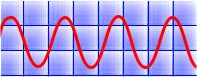
“Hey, that’s those graphs you showed me, with the wave on the top line and the slope underneath.”

“Bingo. Pandemics are a long way from the simple systems that Newton studied, but the important point is that to study his planets and pendulums he developed general strategies for tackling complex situations. He started with just a few basic concepts, like position and speed, and expanded on them.”

“Speed’s speed, what’s to expand?”

“Newton expanded the notion of speed to velocity, which also includes direction. From Newton’s point of view, the velocity of a planet in orbit is continuously changing even if its miles per hour is as steady as … a planet.”

“Who cares?”

“Newton did, because he wanted to know what makes the change happen. His starting point was if there’s any motion, it’s got to be at constant speed and in a straight line unless some force causes a velocity change. That’s where his notion of gravity came from — he invented the idea of ‘the force of gravity‘ to account for us not flying off the rotating Earth and the Earth not zooming away from the Sun. His methods set the model that physicists have followed ever since — if we see motion, we measure how fast it’s happening and then we look for the force or forces that can explain that.”

“Now I see where you’re going. That ‘velocity of money‘ thing is about how fast the paper changes hands, isn’t it? Wait, if Vinnie had put that twenty up on his wall as a trophy, then the chain would’ve been broken.”

“Right, or if Al had diverted it to buy, say, coffee beans. That’s why we say velocity of money and not speed, because the direction of flow counts.”

“Smelling more and more like Physics, Sy. Like, there’s astrophysics and biophysics and you’re coming up with econophysics.”

“Well, yeah, but I didn’t invent the term. It’s already out there, with textbooks and academic study groups and everything. It’s just interesting to use economics as a metaphor for physics and vice-versa. The fun is in seeing where the metaphors break down.”

“I see one already, Sy. Those forces — we all had different reasons to kick the bill along.”

“Good point. Now we figure out those forces.”

~~ Rich Olcott

Disentangling 3-D Plaid

Our lake-side jog has slowed to a walk and suddenly Mr Feder swerves off the path to thud onto a park bench. “I’m beat.”

Meanwhile, heavy footsteps from behind on the gravel path and a familiar voice. “Hey, Sy, you guys talking physics?”

“Well, we were, Vinnie. Waves, to be exact, but Feder’s faded and anyway his walk wasn’t fast enough to warm me up.”

“I’ll pace you. What’d I miss?”

“Not a whole lot. So many different kinds of waves but physicists have abstracted them down to a common theme — a pattern that moves through space.”

“Haw — flying plaid.”

“That image would work if each fiber color carried specific values of energy and momentum and the cross-fibers somehow add together and there’s lots of waves coming from all different directions so it’s 3-D.”

“Sounds complicated.”

“As complicated as the sound from a symphony.”

“I prefer dixieland.”

“Same principle. Trumpet, trombone, clarinet, banjo — many layers of harmony but you can choose to tune in on just one line. That’s a clue to how physicists un-complicate waves.”

“How so?”

“Back in the early 19th century, Fourier showed that you can think about any continuous variation stream, no matter how complicated, in terms of a sum of very simple variations called sine waves. You’ve seen pictures of a sine wave — just a series of Ss laid on their sides and linked together head-to-tail.”

“Your basic wiggly line.”

“Mm-hm, except these wiggles are perfectly regular — evenly spaced peaks, all with the same height. The regularity is why sine waves are so popular. Show a physicist something that looks even vaguely periodic and they’ll immediately start thinking sine wave frequencies. Pythagoras did that for sound waves 2500 years ago.”

“Nah, he couldn’t have — he died long before Fourier.”

“Good point. Pythagoras didn’t know about sine waves, but he did figure out how sounds relate to spatial frequencies. Pluck a longer bowstring, get a lower note. Pinch the middle of a vibrating string. The strongest remaining vibration in the string sounds like the note from a string that’s half as long. Pythagoras worked out length relationships for the whole musical scale.”

“You said ‘spacial frequency’ like there’s some other kind.”

“There is, though they’re closely related. Your ear doesn’t sense the space frequency, the distance between peaks. You sense the time between peaks, the time frequency, which is the space frequency, peaks per meter, times how fast the wave travels, meters per second. See how the units work out?”

“Cute. Does that space frequency/time frequency pair-up work for all kinds of waves?”

“Mostly. It doesn’t work for standing waves. Their energy’s trapped between reflectors or some other way and they just march in place. Their time frequency is zero peaks per second whatever their peaks per meter space frequency may be. Interesting effects can happen if the wave velocity changes, say if the wave path crosses from air to water or if there’s drastic temperature changes along the path.”

“Hah! Mirages! Wait, that’s light getting deflected after bouncing off a hot surface into cool air. Does sound do mirages, too?”

“Sure. Our hearing’s not sharp enough to notice sonic deflection by thermal layering in air, but it’s a well-known issue for sonar specialists. Echoes from oceanic cold/warm interfaces play hob with sonar echolocation. I’ll bet dolphins play games with it when the cold layer’s close enough to the surface.”

“Those guys will find fun in anything. <pause> So Pythagoras figured sound frequencies playing with a bow. Who did it for light?”

“Who else? Newton, though he didn’t realize it. In his day people thought that light was colorless, that color was a property of objects. Newton used the rainbow images from prisms to show that color belonged to light. But he was a particle guy. He maintained that every color was a different kind of particle. His ideas held sway for over 150 years until Fresnel convinced the science community that lightwaves are a thing and their frequencies determine their color. Among other things Fresnel came up with the math that explained some phenomena that Newton had just handwaved past.”

“Fresnel was more colorful than Newton?”

“Uh-uh. Compared to Newton, Fresnel was pastel.”

~~ Rich Olcott

The Jet and The Plane

“OK, Sy, I get your point about a black hole being more than a mystical event horizon hiding whatever’s inside it. I’ll give you it’s a structure with a trapped-light shell and a pumpkin-donut belt around that –“

“… if it’s rotating, Vinnie…”

“– if it’s rotating, but what does all that have to do with those huge jets coming out of the poles instead of the equator where they belong?”

Suddenly Newt Barnes, astrophysicist in training, is standing by our table. “You guys are talking my research topic, just the hottest thing in astrophysics these days. Those jets were the subject of over a thousand papers last year. Mind if I sit in?”

“Of course not.” “We’re all ears.”

“Well, there’s a couple more layers to peel before we can make a maybe connection. Vinnie, what’s the weirdest thing about those jets?”

“Like I said, they’re huge — millions of lightyears long.”

“True, but other structures are huge, too — galaxy superclusters, for instance. The real weirdness is how narrow the jets are — less than a degree wide, and they’ve maintained that tight geometry while they’ve grown for millions of years. We still don’t know what’s in a jet. If it’s a beam of charged particles you’d think they’d repel each other and spread out almost immediately. If the particles are uncharged they’d bang into each other and into the prevailing interstellar medium. Random collisions would spread the beam out maybe a little slower than a charged-particle beam but still. A photon beam would be more stable but you’d need a really good collimating mechanism at the jet’s base to get the waves all marching so precisely.”

“What’s left, dark matter?”

“Almost certainly not. Many jets emit huge quantities of electromagnetic radiation at all frequencies from radio up through X-rays and beyond. Dark matter doesn’t do electromagnetism. No, jets are somehow created from normal stuff. The question is, how is it kept under such tight control?”

“The other question is, where’s all that stuff coming from if nothing can escape outta the event horizon?”

“Ah, that has to do with yet another part of the structure — the accretion disk.”

“What they got that orange picture of, right? Big ring like Saturn’s.”

“Well, similar shape, but different origin, different composition and very different dynamics. Saturn’s rings are mostly water-ice, built up from the debris of ice-moons that collided or were pulled apart by tidal forces. A black hole’s accretion disk is made up of planets, dust particles, atoms, whatever junk was unfortunate enough to be too close when the black hole passed by. Pick any incoming object and call it Freddie. Unless Freddie and the event horizon’s core are on an exact collision course, Freddie gets swept up by the disk.”

“Then what happens?”

“Freddie collides with something already in the disk. Lots of somethings. Each collision does two things. One, Freddie and the something break into smaller pieces. Two, some of Freddie’s gravitational potential energy relative to the core is converted to heat, making the collision debris package hotter than Freddie and the something were to begin with. After a while, Freddie gets ground down to atoms or smaller and they’re all really hot, radiating intensely just like Planck and Einstein said they would.”

“So we got a ring like Saturn’s, like I said.”

“Only sort of. Saturn has half-a-dozen distinct rings. They shine by reflected sunlight, the middle ring is brightest and broadest, and the innermost ring is dark and skinny. Our only direct accretion disk image so far is a one blurry view, but the object shines with its own light and in theory the disk isn’t segmented. There should be just one ring and it’d be brightest at a sharp inner edge.”

“Why’s that?”

“The light’s produced by hot particles. Heat generation’s most intense where the gravity well is steepest. That’s nearest the core. For a non-spinning black hole the threshold is one-sixth of the horizon’s diameter. If Freddie gets knocked the slightest bit closer than that it’s doomed to fall the rest of the way in. The edge is closer-in if the hole’s rotating but then Freddie has an interesting time. Relatively.”

“Gonna be frames again, right?”

“Yeah.”

~~ Rich Olcott

The Top Choice

Al grabs me as I step into his coffee shop. “Sy, ya gotta stop Vinnie, he’s using up paper napkins again, and he’s making a mess!”

Sure enough, there’s Vinnie at his usual table by the door. He’s got a kid’s top, a big one, spinning on a little stand. He’s methodically dropping crumpled-up paper wads onto it and watching them fly off onto the floor. “Hey, Vinnie, what’s the project?”

“Hi, Sy. I’m trying to figure how come these paper balls are doing a circle but when they fly off they always go in a straight line, at least at first. They got going-around momentum, right, so how come they don’t make a spiral like stars in a galaxy?”

Astronomy professor Cathleen’s standing in the scone line. She never misses an opportunity to correct a misconception. “Galaxy stars don’t spray out of the center in a spiral, Vinnie. Like planets going around a star, stars generally follow elliptical orbits around the galactic center. A star that’s between spiral arms now could be buried in one ten million years from now. The spiral arms appear because of how the orbits work. One theory is that the innermost star orbits rotate their ellipse axes more quickly than the outer ones and the spirals form where the ellipses pile up. Other theories have to do with increased star formation or increased gravitational attraction within the pile-up regions. Probably all three contribute to the structures. Anyhow, spirals don’t form from the center outward.”

My cue for some physics. “What happens in a galaxy is controlled by gravity, Vinnie, and gravity doesn’t enter into what you’re doing. Except for all that paper falling onto Al’s floor. There’s no in-plane gravitational or electromagnetic attraction in play when your paper wads leave the toy. Newton would say there’s no force acting to make them follow anything other than straight lines once they break free.”

“What about momentum? They’ve got going-around momentum, right, shouldn’t that keep them moving spirally?”

I haul out Old Reliable for a diagram. “Thing is, your ‘going-around momentum,’ also known as ‘angular momentum,’ doesn’t exist. Calm down, Vinnie, I mean it’s a ‘fictitious force‘ that depends on how you look at it.”

“Is this gonna be frames again?”

“Yup. Frames are one of our most important analytical tools in Physics. Here’s your toy and just for grins I’ve got it going around counterclockwise. That little white circle is one of your paper wads. In the room’s frame that wad in its path is constantly converting linear momentum between the x-direction and the y-direction, right?”

“East-West to North-South and back, yeah, I get that.”

“Such a mess to calculate. Let’s make it easier. Switch to the perspective of a frame locked to the toy. In that frame the wad can move in two directions. It can fly away along the radial direction I’ve called r, or it can ride along sideways in the s-direction.”

“So why hasn’t it flown away?”

“Because you put some spit on it to make it stick — don’t deny it, I saw you. While it’s stuck, does it travel in the r direction?”

“Nope, only in the s direction. Which should make it spiral like I said.”

“I’m not done yet. One of Newton’s major innovations was the idea of infinitesimal changes, also known as little-bits. The s-direction is straight, not curved, but it shifts around little-bit by little-bit as the top rotates. Newton’s Laws say force is required to alter momentum. What force influences the wad’s s-momentum?”

“Umm … that line you’ve marked c.”

“Which is the your spit’s adhesive force between the paper and the top. The wad stays stuck until the spit dries out and no more adhesion so no more c-force. Then what happens?”

“It flies off.”

“In which direction?”

“Huh! In the r-direction.”

“And in a straight line, just like Newton said. What you called ‘going-around momentum’ becomes ‘radial momentum’ and there’s no spiraling, right?”

“I guess you’re right, but I miss spirals.”

Al comes over with a broom. “Now that’s settled, Vinnie, clean up!”

~~ Rich Olcott

  • Thanks for the question, Jen Keeler. Stay tuned.

Where would you put it all?

Vinnie’s a big guy but he’s good at fading into the background. I hadn’t even noticed him standing in the back corner of Cathleen’s impromptu seminar room until he spoke up. “That’s a great theory, Professor, but I wanna see numbers for it.”

“Which part of it don’t you like, Vinnie?”

“You made it seem so easy for all those little sea thingies to scrub the carbon dioxide out of Earth’s early atmosphere and just leave the nitrogen and oxygen behind. I mean, that’d be a lot of CO2. Where’d they put it all?”

“That’s a reasonable question, Vinnie. Lenore, could you put your Chemistry background to work on it for us?”

“Oh, this’ll be fun, but I don’t want to do it in my head. Mr Moire, could you fire up Old Reliable for the calculations?”

“No problem. OK, what do you want to calculate?”

“Here’s my plan. Rather than work with the number of tons of carbon in the whole atmosphere, I’ll just look at the sky-high column of air sitting on a square meter of Earth’s surface. We’ll figure out how many moles of CO2 would have been in that column back then and then work on how thick a layer of carbon stuff it would make on the surface. Does that sound like a good attack, Professor?”

“Sure, but I see a couple of puzzled looks in the class. You’d better say something about moles first.”

“Hey, I know about moles. Sy and me talked about ’em when he was on that SI kick. They’re like a super dozen, right, Sy?”

“Right, Vinnie. A mole of anything is 6.02×10²³ of that thing. Eggs, atoms, gas molecules, even stars if that’d be useful.”

“Back to my plan. First thing is the CO2 was in that column back when. Maria, your chart showed that Venus’ atmospheric pressure is 100 times ours and Mars’ is 1/100 ours and each of them is nearly pure CO2, right? So I’m going to assume that Earth’s atmosphere was what we have now plus a dose of CO2 that’s the geometric mean of Venus and Mars. OK, Professor?”

“That’d be a good starting point, Lenore.”

“Good. Now we need the mass of that CO2, which we can get from the weight of the column, which we can get from the air pressure, which is what?”

Every car buff in the room, in chorus — “14½ pounds per square inch.”

“I need that in kilograms per square meter.”

“Strictly speaking, pressure’s in newtons per square meter. There’s a difference between weight and force, but for this analysis we can ignore that. Keep going, Lenore.”

“Thanks, Professor. Sy?”

“Old Reliable says 10194 kg/m².”

“So we’ve got like ten-thousand kilograms of CO2 in that really tall meter-square column of ancient air. Now divide that by, um, 44 to get the number of moles of CO2. No, wait, then multiply by 1000 because we’ve got kilograms and it’s 44 grams per mole for CO2.”

“232 thousand moles. Still sounds like a lot.”

“I’m not done. Now we take that carbon and turn it into coal which is solid carbon mostly. One mole of carbon from each mole of CO2. Take the 232 thousand moles, multiply by 12 grams, no make that 0.012 kilogram per mole –“

“2786 kilograms”

“Right. Density of coal is about 2 grams per cc or … 2000 kilograms per cubic meter. So. Divide the kilograms by 2000 to get cubic meters.”

“1.39 meters stacked on that square-meter base.”

“About what I guessed it’d be. Vinnie, if Earth once had a carbon-heavy atmosphere log-halfway between Venus and Mars, and if the sea-plankton reduced all its CO2 down to coal, it’d make a layer all over the planet not quite as tall as I am. If it was chalk it’d be thicker because of the additional calcium and oxygen atoms. A petroleum layer would be thicker, too, with the hydrogens and all, but still.”

Jeremy’s nodding vigorously. “Yeah. We’ve dug up some of the coal and oil and put it back into the atmosphere, but there’s mountains of limestone all over the place.”

Cathleen’s gathering up her papers. “Add in the ocean-bottom carbonate ooze that plate tectonics has conveyor-belted down beneath the continents over the eons. Plenty of room, Vinnie, plenty of room.”

~~ Rich Olcott

Maybe even smaller?

There’s a sofa in my office. Sometimes it’s used to seat some clients for a consultation, sometimes I use it for a nap. This evening Anne and I are sitting on it, close together, after a meal of Eddie’s Pizza d’amore.

“I’ve been thinking, Sy. I don’t want to use my grow-shrink superpower very much.”

“Fine with me, I like the size you are. Why’d you decide that?”

“I remember Alice saying, ‘Three inches is such a wretched height to be.’ She was thinking about what her cat would do to her at that height. I’m thinking about what an amoeba might do to me if I were down to bacteria-size and I wouldn’t be able to see it coming because I’d be too small to see light. It would be even messier further down.”

“Well, mess is the point of quantum mechanics — all we get is the averages because it’s all chaos at the quantum level. Bohr would say we can’t even talk about what’s down there, but you’d be in the thick of it.”

She shudders delicately, leans in tighter. <long, very friendly pause> “Where’d that weird number come from, Sy?”

“What weird number?”

“Ten-to-the-minus-thirty-fifth. You mentioned it as a possible bottom to the size range.”

Now you’re asking?”

“I’ve got this new superpower, I need to think about stuff.  Besides, we’ve finished the pizza.”

<sigh> “This conversation reminds me of our elephant adventure.  Oh well.  Umm. It may have started on a cold, wet afternoon. You know, when your head’s just not up to real work so you grab a scratchpad and start doodling? I’ll bet Max Planck was in that state when he started fiddling with universal constants, like the speed of light and his own personal contribution ħ, the quantum of action.”

“He could change their values?”

“No, of course not. But he could combine them in different ways to see what came out. Being a proper physicist he’d make sure the units always came out right. I’m not sure which unit-system he worked in so I’ll just stick with SI units, OK?”

“Why should I argue?”

“No good reason to. So… c is a velocity so its units are meters per second. Planck’s constant ħ is energy times time, which you can write either as joule-seconds or kilogram-meter² per second. He couldn’t just add the numbers together because the units are different. However, he could divide the one by the other so the per-seconds canceled out. That gave him kilogram-meters, which wasn’t particularly interesting. The important step was the next one.”

“Don’t keep me in suspense.”

“He threw Newton’s gravitational constant G into the mix. Its units are meter³ per kilogram per second². ‘Ach, vut a mess,’ he thought, ‘but maybe now ve getting somevere. If I multiply ħ by G the kilograms cancel out und I get meter5 per second³. Now … Ah! Divide by c³ vich is equal to multiplying by second³/meter³ to cancel out all the seconds and ve are left mit chust meter² vich I can take the square root uff. Wunderbar, it is simply a length! How ’bout that?‘”

“Surely he didn’t think ‘how ’bout that?‘”

“Maybe the German equivalent. Anyway, doodling like that is one of the ways researchers get inspirations. This one was so good that (Għ/c³)=1.6×10-35 meter is now known as the Planck length. That’s where your ten-to-the-minus-thirty-fifth comes from.”

“That’s pretty small. But is it really the bottom?”

“Almost certainly not, for a couple of different reasons. First, although the Planck formula looks like a fundamental limit, it’s not. In the same report Planck re-juggled his constants to define the Planck mass (ħc/G)=2.2×10-8 kilograms or 22 micrograms. Grains of sand weight less than that. If Planck’s mass isn’t a limit, Planck’s length probably isn’t either. Before you ask, the other reason has to do with relativity and this is not the time for that.”

“Mmm … so if space is quantized, which is where we started, the little bits probably aren’t Planck-sized?”

“Who knows? But my guess is, no, probably much smaller.”

“So I wouldn’t accidentally go out altogether like a candle then. That’s comforting to know.”

My turn to shudder. <another long, friendly pause>.

~~Rich Olcott