

The Crazy Theory contest is still going strong in the back room at Al’s coffee shop. I gather from the score board scribbles that Jim’s Mars idea (one mark-up says “2 possible 2 B crazy!“) is way behind Amanda’s “green blood” theory. There’s some milling about, then a guy next to me says, “I got this, hold my coffee,” and steps up to the mic. Big fellow, don’t recognize him but some of the Physics students do — “Hey, it’s Cap’n Mike at the mic. Whatcha got for us this time?”
“I got the absence of a theory, how’s that? It’s about the Four Forces.”
Someone in the crowd yells out, “Charm, Persuasiveness, Chaos and Bloody-mindedness.”
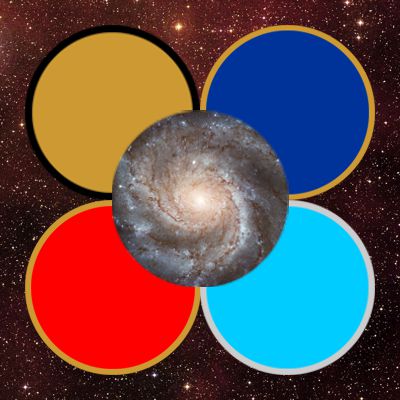
“Nah, Jennie, that’s Terry Pratchett’s Theory of Historical Narrative. We’re doing Physics here. The right answer is Weak and Strong Nuclear Forces, Electromagnetism, and Gravity, with me? Question is, how do they compare?”
Another voice from the crowd. “Depends on distance!”
“Well yeah, but let’s look at cases. Weak Nuclear Force first. It works on the quarks that form massive particles like protons. It’s a really short-range force because it depends on force-carrier particles that have very short lifetimes. If a Weak Force carrier leaves its home particle even at the speed of light which they’re way too heavy to do, it can only fly a small fraction of a proton radius before it expires without affecting anything. So, ineffective anywhere outside a massive particle.”
It’s a raucous crowd. “How about the Strong Force, Mike?”
. <chorus of “HOO-wah!”>
“Semper fi that. OK, the carriers of the Strong Force —”
. <“Naa-VY! Naaa-VY!”>
. <“Hush up, guys, let him finish.”>
“Thanks, Amanda. The Strong Force carriers have no mass so they fly at lightspeed, but the force itself is short range, falls off rapidly beyond the nuclear radius. It keeps each trio of quarks inside their own proton or neutron. And it’s powerful enough to corral positively-charged particles within the nucleus. That means it’s way stronger inside the nucleus than the Electromagnetic force that pushes positive charges away from each other.”
“How about outside the nucleus?”
“Out there it’s much weaker than Electromagnetism’s photons that go flying about —”
. <“Air Force!”>
. <“You guys!”>
“As I was saying… OK, the Electromagnetic Force is like the nuclear forces because it’s carried by particles and quantum mechanics applies. But it’s different from the nuclear forces because of its inverse-square distance dependence. Its range is infinite if you’re willing to wait a while to sense it because light has finite speed. The really different force is the fourth one, Gravity —”
. <“Yo Army! Ground-pounders rock!”>
“I was expecting that. In some ways Gravity’s like Electromagnetism. It travels at the same speed and has the same inverse-square distance law. But at any given distance, Gravity’s a factor of 1038 punier and we’ve never been able to detect a force-carrier for it. Worse, a century of math work hasn’t been able to forge an acceptable connection between the really good Relativity theory we have for Gravity and the really good Standard Model we have for the other three forces. So here’s my Crazy Theory Number One — maybe there is no connection.”
. <sudden dead silence>
“All the theory work I’ve seen — string theory, whatever — assumes that Gravity is somehow subject to quantum-based laws of some sort and our challenge is to tie Gravity’s quanta to the rules that govern the Standard Model. That’s the way we’d like the Universe to work, but is there any firm evidence that Gravity actually is quantized?”
. <more silence>
“Right. So now for my Even Crazier Theories. Maybe there’s a Fifth Force, also non-quantized, even weaker than Gravity, and not bound by the speed of light. Something like that could explain entanglement and solve Einstein’s Bubble problem.”
. <even more silence>
“OK, I’ll get crazier. Many of us have had what I’ll call spooky experiences that known Physics can’t explain. Maybe stupid-good gambling luck or ‘just knowing’ when someone died, stuff like that. Maybe we’re using the Fifth Force in action.”
. <complete pandemonium>
~ Rich Olcott
Note to my readers with connections to the US National Guard, Coast Guard, Merchant Marine and/or Public Health Service — Yeah, I know, but one can only stretch a metaphor so far.
 “Gravitational waves are relativity effects and neutrinos are quantum mechanical. Physicists have been struggling for a century to bridge those two domains. Evidence from a three-messenger event could provide the final clues.”

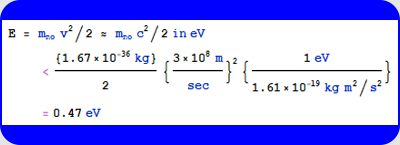 “Half an eV? That’s all? So how come the Big Guy’s got gazillions of eV’s?”
 “That infinity sign at the bottom means ‘as big as you want.’ So to answer your first question, there isn’t a maximum neutrino energy. To make a more energetic neutrino, just goose it to go even closer to the speed of light.”
 “Hello, Jennie. Haven’t seen you for a while.”
 Momentum is velocity times mass. These guys fly so close to lightspeed that for a long time scientists thought that neutrinos are massless like photons. They’re not, so I used several different v/c ratios to see what the relativistic correction does. Slow neutrinos are huge, by atom standards. Even the fastest ones are hundreds of times wider than a nucleus.”
 Cathleen saves me from answering. “Not quite. The study Sy’s chasing is actually a cute variation on red-shift measurements. That ‘PSR‘ designation means the neutron star is a pulsar. Those things emit electromagnetic radiation pulses with astounding precision, generally regular within a few dozen nanoseconds. If we receive slowed-down pulses then the object’s going away; sped-up and it’s approaching, just like with red-shifting. The researchers derived orbital parameters for all three bodies from the between-pulse durations. The heavy dwarf is 200 times further out than the light one, for instance. Not an easy experiment, but it yielded an important result.”

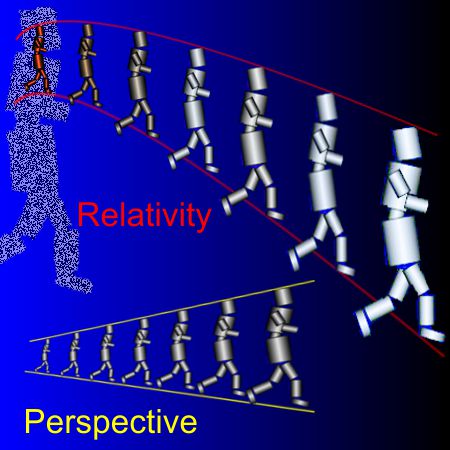
 “But GR’s not the only player. Special Relativity’s in there, too.”